
Select fill for Texas building pads: testing and approval
Use the geotechnical report to define select fill, moisture and compaction requirements. A product name or one PI range cannot approve every slab.
- Scope
- Commercial specifications
- Pricing
- Current catalog; freight and tax separate
- Approval
- Match the grade to your project
Select fill is project-specific
Ask for the geotechnical report, pad limits, structural details and earthwork specification. Select fill is a trade description until those documents define acceptance. There is no universal PI range or liquid-limit cutoff that guarantees suitability for every Central Texas slab. General fill dirt and planting topsoil should not be substituted.
Confirm required laboratory tests
The project professional may specify Atterberg limits, gradation, moisture-density testing or additional suitability checks. Plasticity index describes a measured soil characteristic; it is not a standalone certificate of structural performance. Request a report for the actual proposed source and material, with sampling and report dates.
Separate material approval from placement testing
A source sample report does not verify compaction of the installed pad. The contractor must meet specified lift thickness, moisture conditioning and density requirements, with field testing where required. Laboratory compaction density is not the same as loose truckload planning density.
Do not guess around a foundation
Finished grades must protect drainage openings, slab edges and building clearances. Adding fill beside an existing slab can alter drainage and loading. Rain-exposed slopes may require stabilization and erosion controls before vegetation establishes. Obtain project-specific advice for foundation-adjacent work rather than building a pad from a generic depth table.
Quote approved material in the correct unit
Confirm whether requested cubic yards are loose or compacted before converting to tons. Send the address, requested dates, phased quantities and unloading restrictions. The geometric examples below do not include compaction or shrink/swell allowances. Freight and tax are separate, and dispatch confirms the truck and date.
Materials we deliver for this project
Current material prices and minimums. Confirm the grade for your project; delivery and sales tax are separate.
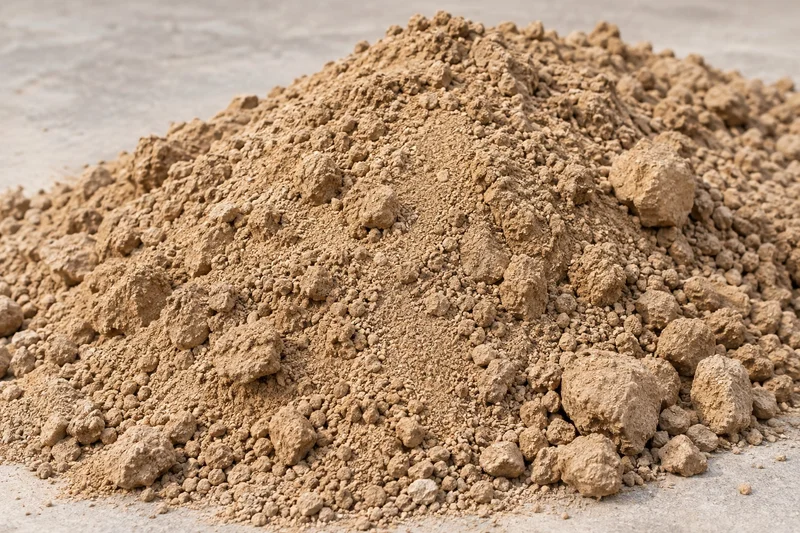
Select Fill
From $22.00/ton
Specified low plasticity fill for pads and structural work. Plasticity index about 7 to 20, no roots or debris. High; compacts to standard Proctor density in 6–8 in lifts.
5 ton minimum
View material →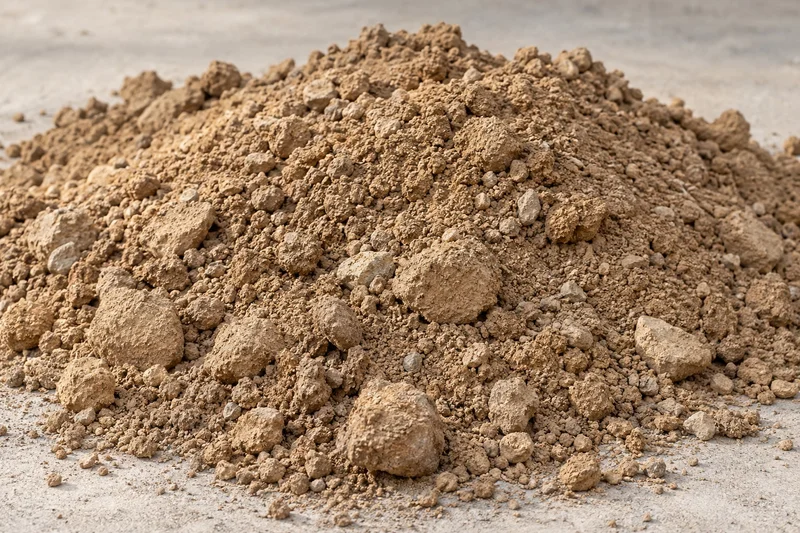
Fill Dirt
From $14.00/ton
Unscreened fill for grading and backfill. Unscreened or lightly processed native fill. Variable; compact in controlled lifts.
5 ton minimum
View material →Quantity planning examples
Example dimensions only, not recommended installation depths. Prices and minimums come from the current catalog. No compaction or waste allowance is added; delivery and sales tax are separate.
| Example / material | Volume | Estimated tons | Order tons | Material subtotal |
|---|---|---|---|---|
Geometric pad layer, 30 × 40 ft at 6 in Select Fill | 22.22 yd³ | 28.89 | 28.89 5-ton min | $635.58 |
Geometric pad layer, 30 × 40 ft at 6 in Fill Dirt | 22.22 yd³ | 27.78 | 27.78 5-ton min | $388.92 |
Tonnage calculator
Enter your area and depth to see how many tons you need. Pick a material to use its real planning density. Confirm moisture and compaction needs for your site.
Auto-filled from Select Fill (1.30 t/yd³ · 2,600 lb/yd³). Override only if you know your source density.
Enter a length, width, and depth to calculate how many tons you need.
Planning estimate only. Actual tonnage varies with moisture, compaction and source. Material minimums apply; freight and sales tax are separate. Beyond 40 miles, delivery needs a confirmed address-specific quote. Dispatch confirms truck access and the requested date.
Delivery across Central Texas
Check your town and ZIP, then share the actual address, access restrictions and requested date. Dispatch confirms material availability, suitable equipment and timing. Freight outside confirmed haul bands requires an address-specific quote.
Further specification guidance
Contractor submittal templates
Project cover sheet and laboratory test request. Blank templates only; attach actual reports and obtain project approval.
Download the CTM submittal packageMore guides
- TxDOT Item 247 flexible base: a contractor buying checklist
- Pipe bedding sand: specifications, testing and submittals
- How to fix a muddy driveway in Central Texas
- Bull rock vs riprap for erosion control in Central Texas
- French drain gravel: clean limestone vs pea gravel
- Lawn topdressing in Central Texas: soil, timing and quantities