
Decomposed granite patios: base, drainage and buying guide
Plan a DG patio around the subgrade, containment and water flow. Distinguish unstabilized granite from an approved stabilized surface.
- Scope
- Spring preparation
- Pricing
- Current catalog; freight and tax separate
- Approval
- Match the grade to your project
Know which granite you are buying
Decomposed or crushed granite products vary in grading and fines. The catalog grade should not be assumed to contain a stabilizer or to perform like a proprietary bound system. Confirm current size range, color and any specified binder. Product photographs are illustrative, not proof of the incoming source sample.
Design the foundation and water flow
Set the finished elevation, subgrade preparation, base section and drainage with your installer. A low patio surrounded by edging can trap runoff. Keep water away from buildings and preserve threshold and drainage clearances. Base and surface are separate layers with separate quantities; no single thickness fits every soil, slope or use.
Contain the surface and plan compaction
Suitable edging limits migration into lawns and paths. Compaction and moisture conditioning should follow the chosen material or system requirements. Unstabilized granite can dust, track and erode in rain. Do not promise an automatically wheelchair-accessible or erosion-proof surface; accessible routes require a firm, stable, compliant design.
Measure before selecting the truckload
Calculate patio area and the designed loose quantity for each layer. Confirm the installer's compaction allowance separately. The examples below demonstrate geometry, not recommended base or surface depth. Review live prices and minimums for granite and base rather than estimating with a single gravel density.
Maintain the cause of wear
Keep drainage outlets open and repair runoff paths before replenishing washed-out granite. Remove organic debris and address uneven settlement with the installer. Delivery does not include excavation, spreading or compaction. Confirm address-specific freight, truck access and the requested date.
Materials we deliver for this project
Current material prices and minimums. Confirm the grade for your project; delivery and sales tax are separate.
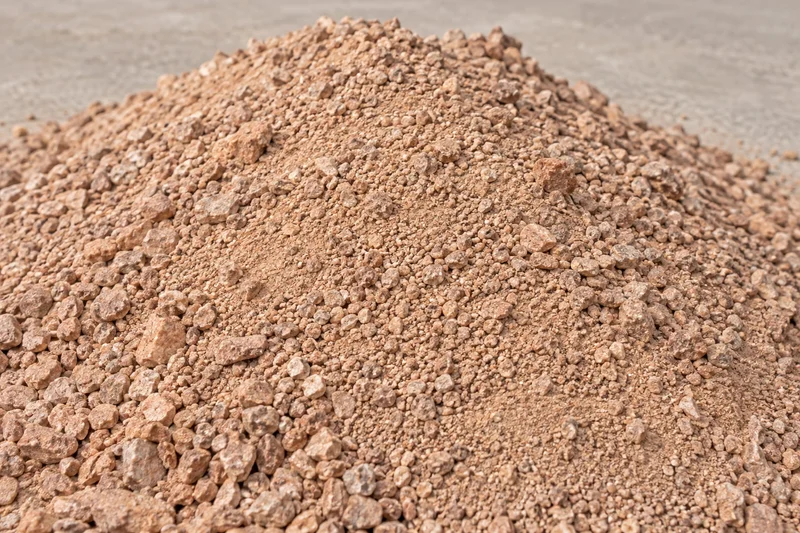
Decomposed Granite
From $42.00/ton
Warm tan DG for paths, patios and xeriscape. Typical sieve analysis: ⅜ in 100% passing · No. 4 90–100% · No. 10 70–90% · No. 40 35–55% · No. 200 10–20% fines. High; compact in 2 to 3 in lifts at optimum moisture to 95% standard Proctor. Typical CBR 60+ compacted..
2 ton minimum
View material →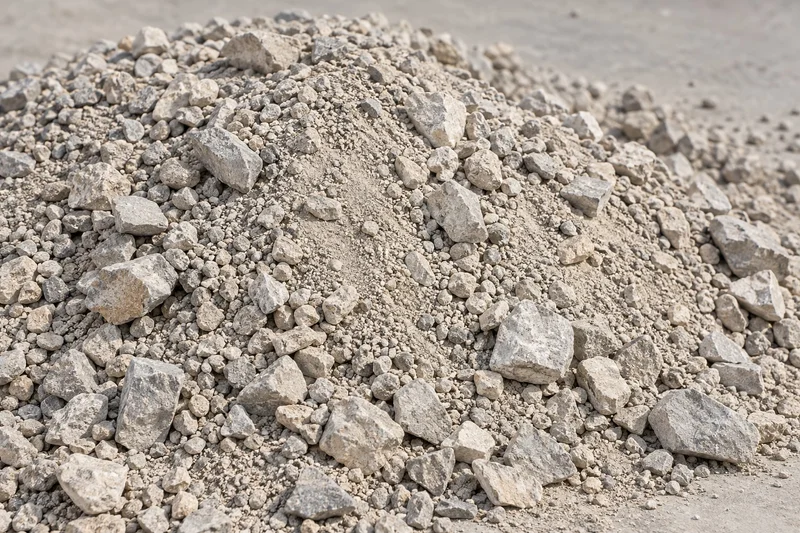
Limestone Flex Base - Standard
From $26.00/ton
Standard crushed limestone base with fines Standard crushed limestone base with fines. Follow the approved project moisture, lift thickness and installation specification.
3 ton minimum
View material →Quantity planning examples
Example dimensions only, not recommended installation depths. Prices and minimums come from the current catalog. No compaction or waste allowance is added; delivery and sales tax are separate.
| Example / material | Volume | Estimated tons | Order tons | Material subtotal |
|---|---|---|---|---|
Surface scenario, 12 × 16 ft at 2 in Limestone Flex Base - Standard | 1.19 yd³ | 1.84 | 3 3-ton min | $78.00 |
Surface scenario, 12 × 16 ft at 2 in Decomposed Granite | 1.19 yd³ | 1.60 | 2 2-ton min | $84.00 |
Surface scenario, 20 × 20 ft at 3 in Limestone Flex Base - Standard | 3.70 yd³ | 5.74 | 5.75 3-ton min | $149.50 |
Surface scenario, 20 × 20 ft at 3 in Decomposed Granite | 3.70 yd³ | 5.00 | 5 2-ton min | $210.00 |
Tonnage calculator
Enter your area and depth to see how many tons you need. Pick a material to use its real planning density. Confirm moisture and compaction needs for your site.
Auto-filled from Limestone Flex Base - Standard (1.55 t/yd³ · 3,100 lb/yd³). Override only if you know your source density.
Enter a length, width, and depth to calculate how many tons you need.
Planning estimate only. Actual tonnage varies with moisture, compaction and source. Material minimums apply; freight and sales tax are separate. Beyond 40 miles, delivery needs a confirmed address-specific quote. Dispatch confirms truck access and the requested date.
Delivery across Central Texas
Check your town and ZIP, then share the actual address, access restrictions and requested date. Dispatch confirms material availability, suitable equipment and timing. Freight outside confirmed haul bands requires an address-specific quote.
Further specification guidance
More guides
- Lawn topdressing in Central Texas: soil, timing and quantities
- Tons vs cubic yards: calculate a bulk material order
- How to fix a muddy driveway in Central Texas
- Bull rock vs riprap for erosion control in Central Texas
- French drain gravel: clean limestone vs pea gravel
- TxDOT Item 247 flexible base: a contractor buying checklist