
Hill Country slopes: gravel, grading and erosion planning
Rocky ground does not remove the need for runoff design. Choose slope-appropriate materials and safe delivery access in the Hill Country.
- Scope
- Local soil planning
- Pricing
- Current catalog; freight and tax separate
- Approval
- Match the grade to your project
Check the site, not just the town
Dripping Springs, Lakeway, Spicewood and Marble Falls include varied slopes, soil depths and disturbed fills. Shallow limestone or caliche may be present, but it is not guaranteed on every lot. Review the actual property and seek geotechnical advice for structural or unstable-slope work.
Keep runoff controlled
Concentrated flow can carry fine granite and loose surface rock downslope. Plan crossfall, outlets, swales and culvert protection without transferring the problem to a neighbor. Steep or actively eroding areas need a designed repair; decorative rock is not a substitute for a stable channel or retaining system.
Compare base and surface functions
Caliche and limestone flex base are foundation candidates only when the grade matches the design. DG is a surface option with potential erosion and tracking limitations. Riprap requires design-specific sizing and filtering. Choose from approved functions, then compare delivered cost rather than assuming one product works everywhere.
Do not modify slab-adjacent grades by guesswork
Maintain building and drainage clearances. Raising grades can direct water toward a foundation or bury openings. Fill and loose rock on rain-exposed slopes may require temporary stabilization and a permanent erosion plan. Get site-specific direction before adding weight or altering runoff paths.
Plan the unloading route
Report driveway slope, gate width, tight bends, overhead lines, bridge limits and a firm level dump area. A suitable truck must be confirmed for the actual address. Calculate each designed layer separately; the example below is not a slope-stability design. Freight and tax remain separate.
Materials we deliver for this project
Current material prices and minimums. Confirm the grade for your project; delivery and sales tax are separate.
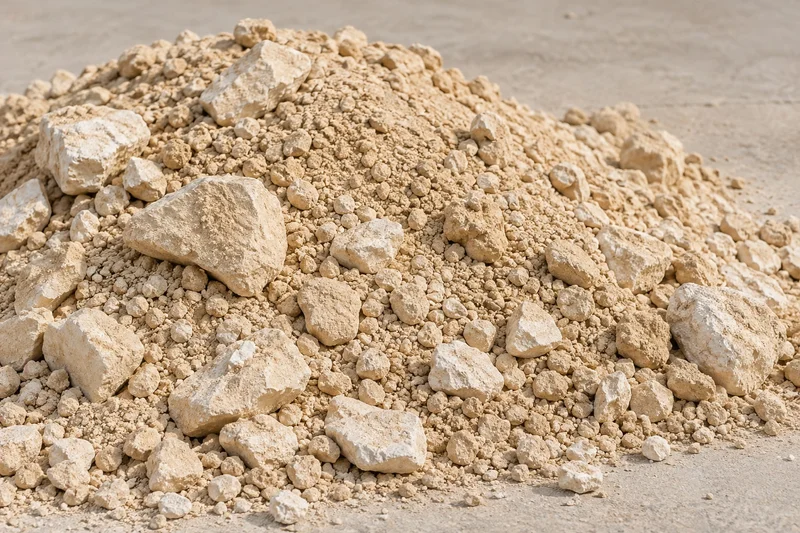
Caliche Road Base
From $20.00/ton
Economical binding base for ranch roads. Natural caliche with mixed aggregate. Excellent when moisture-conditioned.
5 ton minimum
View material →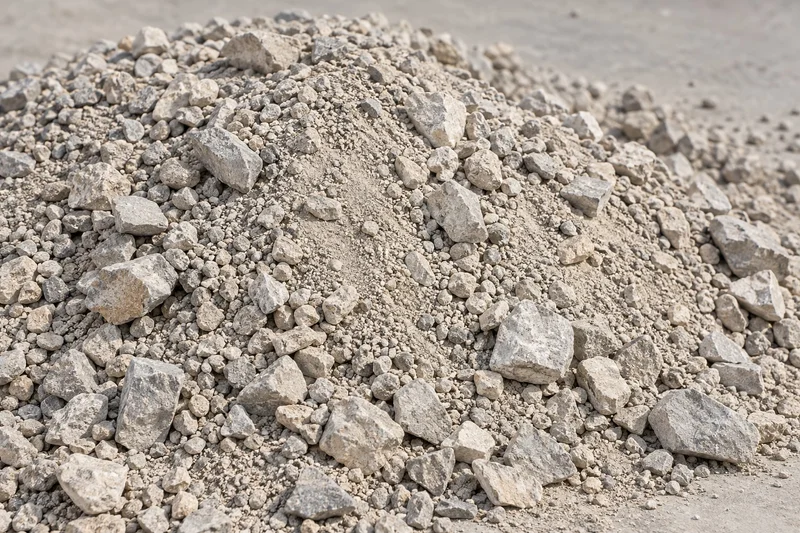
Limestone Flex Base - Standard
From $26.00/ton
Standard crushed limestone base with fines Standard crushed limestone base with fines. Follow the approved project moisture, lift thickness and installation specification.
3 ton minimum
View material →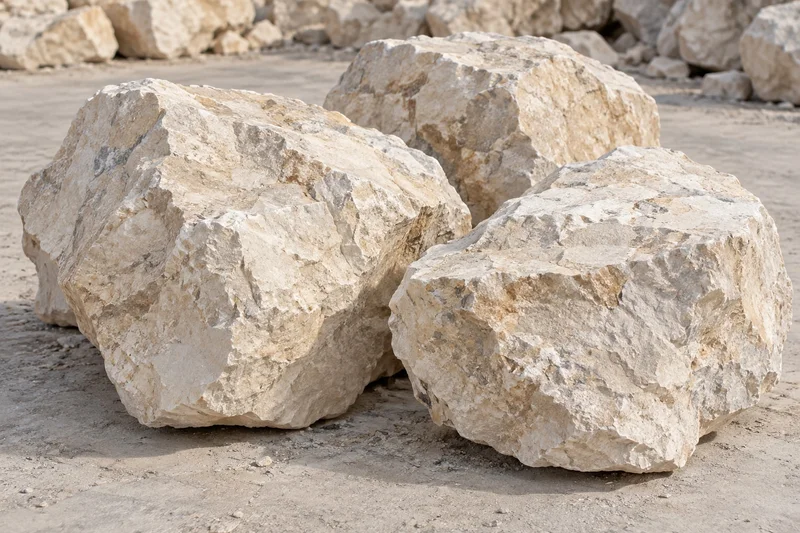
Limestone Boulders - Racked, 18 in
Priced by quote
18 in nominal size-selected/racked boulders 18 in nominal size-selected/racked boulders. Place with suitable equipment; not compacted like road base.
5 ton minimum
View material →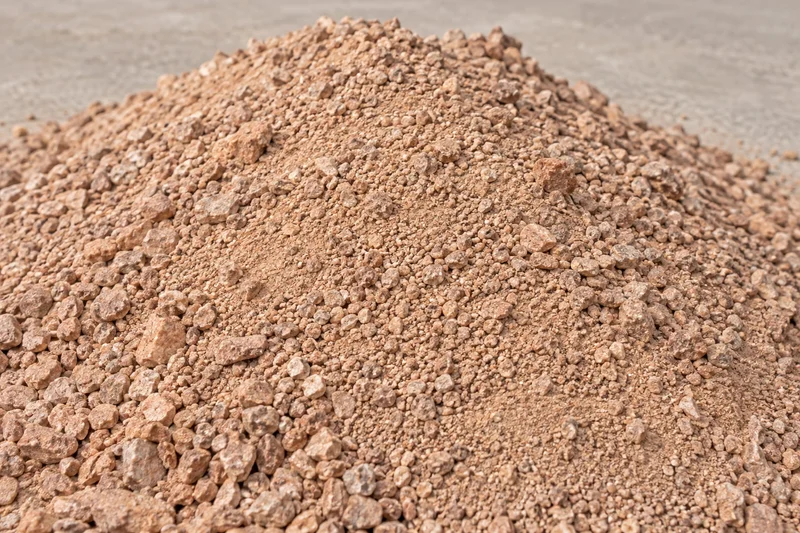
Decomposed Granite
From $42.00/ton
Warm tan DG for paths, patios and xeriscape. Typical sieve analysis: ⅜ in 100% passing · No. 4 90–100% · No. 10 70–90% · No. 40 35–55% · No. 200 10–20% fines. High; compact in 2 to 3 in lifts at optimum moisture to 95% standard Proctor. Typical CBR 60+ compacted..
2 ton minimum
View material →Quantity planning examples
Example dimensions only, not recommended installation depths. Prices and minimums come from the current catalog. No compaction or waste allowance is added; delivery and sales tax are separate.
| Example / material | Volume | Estimated tons | Order tons | Material subtotal |
|---|---|---|---|---|
Coverage scenario, 30 × 12 ft at 4 in Limestone Flex Base - Standard | 4.44 yd³ | 6.89 | 6.89 3-ton min | $179.14 |
Coverage scenario, 30 × 12 ft at 4 in Caliche Road Base | 4.44 yd³ | 6.67 | 6.67 5-ton min | $133.40 |
Tonnage calculator
Enter your area and depth to see how many tons you need. Pick a material to use its real planning density. Confirm moisture and compaction needs for your site.
Auto-filled from Limestone Flex Base - Standard (1.55 t/yd³ · 3,100 lb/yd³). Override only if you know your source density.
Enter a length, width, and depth to calculate how many tons you need.
Planning estimate only. Actual tonnage varies with moisture, compaction and source. Material minimums apply; freight and sales tax are separate. Beyond 40 miles, delivery needs a confirmed address-specific quote. Dispatch confirms truck access and the requested date.
Delivery across Central Texas
Check your town and ZIP, then share the actual address, access restrictions and requested date. Dispatch confirms material availability, suitable equipment and timing. Freight outside confirmed haul bands requires an address-specific quote.
Further specification guidance
More guides
- Driveway subgrade on Central Texas black clay
- How to fix a muddy driveway in Central Texas
- Bull rock vs riprap for erosion control in Central Texas
- French drain gravel: clean limestone vs pea gravel
- TxDOT Item 247 flexible base: a contractor buying checklist
- Pipe bedding sand: specifications, testing and submittals